Development of Hindu Buddhist in Kutai Kingdom
History – In early 5th century AD, the navigation ad trade relations between India and China that passed through Makasar and Kalimantan Straits had not been as busy as avigation through Malacca Strait and west Indonesia. News from China about west Indonesia had been found a lot since the 5th century AD, but little was known about Kalimantan.
Pieces of evidence of the navigation through Makasar and Kalimantan straits were found in several places in the form of statues.
At Sempaga Sout Sulawesi, a bronze statue statue of Buddha was found. The characteristics of the statue showed that is was made in Amara Wati in southern India. In the town of Bangu (Kutai), a few Buddha statues were also found, they showed a style of Gandhara sculpture.
The statues probably arrived in Indonesia as trade articles or gifts for Buddhisst monasteries. Besides Buddha statues, some Hindu statues were also found, for instance the Ganesha statue found in Serawak.
Though the findings were incomplte, it can be concluded that in the beginning of the 6th century AD, navigation and trade relations had developed between India and central Indonesia. Hinduism-Buddhism were spread in some regions of Indonesia along with the trade relations.
Findings of inscriptions in Kutai
In Kutai, in the Mahakam river basin, East Kalimantan to be more exact, seven stone columns with writings on them were found, and they were called Yupas. The writings on the stones were inscriptions declarations of e king.
Baca juga: Thurgood Marshall in Black History
The inscriptions were written in Sanskrit using Pallava scripts. Based on the style, the scripts carved on the Yupas dated back to early 5th century AD. One of the inscriptions contained a declarations of KIng Mulawarman which has been translated into Indonesian language by R.M. Hg. Poerbatjaraka’s as follows :
“King Kunduga, who was very noble, had a famous son named Aswawarman, who, like Ansuman (god of the sun), has developed a very noble family. Aswawarman had three sons, like the three (saints). The most outstanding of the three is Mulawarman, a courteous, strong and powerful king. Mulawarman has had a kenduri (ritual meal) with a lot of gold offerings. It is to mark the ritual meal that this monument is built by the Brahmanas.”
From the inscription we know that there were at least there stages of descent in the royal family, starting from King Kudunga who had a son named Aswawarman., Aswawarman had three sons, one of them was Mulawarman.
Baca juga: The Underground Railroad Black History
In one of the inscriptions, it was stated that Aswawarman was a Vansakartia, which means the founder of a dynasty or royal clan.
A further conclusion which can be made is that the influence of Hindu culture had penetrated the royal circle of Kutai kingdom. King Kudunga who was the first king, had not practiced Hindu culture in the kingdoms’s system. The implementation of Hindu culture was started by ng Aswawarman, who was referred to as the founder of the royal dynasty.
Influence of Hinduism in Kutai Kingdom
The Pallava scripts on Kutai inscriptions showed that there was already a relation between Kutai and Pallava kingdom in south India. The names of kings which ended in “warman” also remind us of the names of Pallava kings such as Mahendrawarman and Narasimhawarman.
Baca juga: 1936 The Triumph at the Berlin Olympics
It was stated in the inscription that King aswawarman was like Ansuman (god of the sun). It whowed that the religion in Kutai kingdom was Hinduism. However, Hindu culture and religion were limited to the royal families only. The majority of people in the kingdom adopted a local belief, that is belief in the spirits of ancestors.
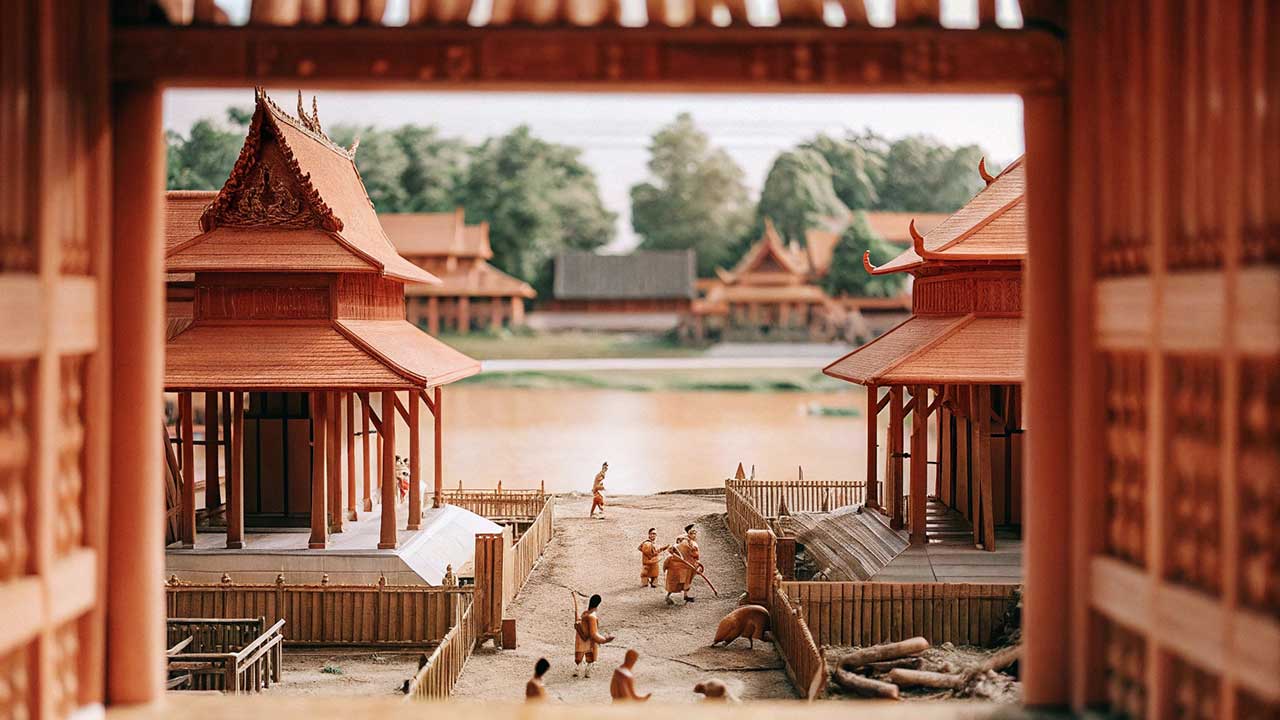
King Mulawarman sacrificed a lot of cows (20.000 cows) delivered by the Brahmanas on a piece of holy land called Waprakesyavara. The place was not a shrine nor atemple, but a holy sacred piece of land surrounded by fences, it was a sacred place for ancient Indonesian people. Obviously there was already a combination of Indonesian-Hindu cultures manifested in an Indonesian building with a Hindu name.
Waprakesyavara, which in Java was called Baprakesyuvara, was a holy place relate4d to praising of Brahmana-Vishnu-Shiva gods. It can be concluded that king Mulawarman professed HInduism of the Shiva sect.
Baca juga: The Thirteenth Amendment
Condition of people in Kutai Kingdom
The writing of inscriptions of Mulawarman’s in Pallava scripts and Sanskrit language showed that in Kutai there was a group of people who mastered Sanskrit, they were the Brahmanas. They came from southern India.
It can be assumed from the inscriptions that Mulawarman was a king who had good relationship with the Brahmanas. This was evident from the fact that in all his inscriptions, the Yupas that adored his name were all built by the Brahmanas as an honour or a gratitude to the king for his courtesy to them.
Next history article : Development of Hindu Buddhist in Tarumanegara Kingdom
Tanks your visited website history.
Baca juga: The Rainbow Coalition

Nama asli saya Supriyadi dan populer Supriyadi Pro. Saya seorang Expert wordpress developer freelancer, content writer, editor. Memiliki minat besar pada dunia teknologi, sains, seni budaya, social media, dan blogging. Saya kelahiran suku Jawa, di Wonogiri, Jawa Tengah yang ahli bahasa Jawa dan seni gamelan. Silahkan hubungi saya lewat laman yang telah disediakan atau kunjungi website profil saya di https://supriyadipro.com